
Why Is My Pool Green When I Open It in Spring?
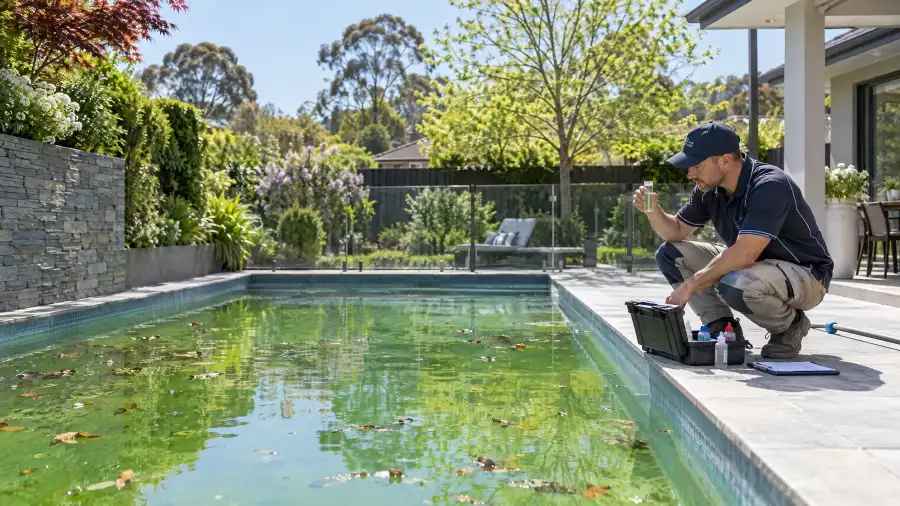
A green pool after winter is common, but it is not random. Learn what happened while the cover was on, what to check first and how to get your water ready for warmer days.
You lift the cover, look into the pool and see green water instead of the clear blue you expected. In Glen Waverley, a pool can change quickly through winter and early spring even when it was clean at the end of the swimming season. Rain, leaves, cool water and reduced circulation create conditions in which algae can establish. When the weather warms, that growth becomes obvious.
The good news is that the colour is a useful warning, not a mystery. Usually, the pool has lost sanitising strength, circulation has been interrupted, or debris has consumed the available chlorine. A green tinge can also come from metals in the water, so adding more product without testing may not solve the underlying problem.
Before anyone swims, treat the pool as unfinished. Keep children and pets away, check that you can see the floor, and inspect the pump and electrical equipment. If the water is very dark, the pump will not prime or you are unsure what the readings mean, arrange professional testing and an equipment inspection.
What causes a pool to turn green over winter?
Green water usually indicates algae. Algae spores can enter with wind-blown dust, rain or organic debris. If the water is cool and the cover is closed, the problem may develop quietly. Once spring sunlight reaches the water and temperatures rise, algae can multiply and create a green film on walls, steps and the floor.
Low sanitiser or drifting chemistry
Chlorine does not remain at the same strength indefinitely. Rain can dilute the water, while leaves and other organic material use up sanitiser. If pH, alkalinity or stabiliser has drifted, the chlorine that remains may also work less effectively. The result can be a pool that looks green even though it was treated before winter.
Little or no circulation
A pump that has been switched off for a long period, lost its prime or developed a fault cannot move water through the filter and chlorination system. Stagnant areas are especially vulnerable around steps, corners and behind ladders. A blocked skimmer basket or filter can create a similar problem by restricting flow.
Leaves, silt and rainwater
Organic matter is food for algae and a burden on filtration. Even a covered pool can receive dirty water if the cover shifts or rainwater sits on top and enters during removal. Fine silt may settle on the floor, then cloud the water when brushing begins.
Metals that look green
Not every green tint is algae. Certain metals can colour water after a change in chemistry or after fresh water is added. The treatment is different, which is why a water test should come before a large chemical correction. A professional can compare the appearance with the readings and inspect the equipment for clues.
Spring pool opening: a practical step-by-step plan
Take the process in order. Removing debris first makes testing more useful and prevents the filter from being overwhelmed. If you need a complete seasonal opening, see the seasonal pool maintenance service for a structured pool-opening visit in Glen Waverley.
- Make the area safe. Keep swimmers out. Look for damaged covers, loose lids, exposed cables, flooded equipment or cracked fittings. Do not restart visibly damaged equipment; arrange an inspection instead.
- Remove the cover carefully. Clear standing water and heavy debris with suitable equipment. If the cover is large or wet, use another adult. Rinse and dry it according to the manufacturer’s directions before storing it.
- Lift out large debris. Use a leaf net for leaves and twigs. Empty the skimmer basket with the pump off, then check the pump basket as directed by the equipment manufacturer. Avoid pushing debris into the plumbing.
- Brush and vacuum in sections. Brush walls, steps, benches and corners with a brush suited to the surface. Vacuum slowly so settled silt is removed rather than stirred throughout the pool. If you cannot see the floor, stop and seek help.
- Check circulation and filtration. Confirm water level, valves, baskets and filter condition. Restart only when the equipment is sound and primed according to its instructions. Listen for grinding, unusual vibration or repeated tripping.
- Test before correcting. Test sanitiser, pH, alkalinity, stabiliser and other relevant levels. For more dependable readings, consider digital pool water testing, particularly when strips give confusing results.
- Correct the chemistry in sequence. Follow the product label and your equipment instructions. Never mix products together. Add only what the test indicates, allow time for circulation and retest before making another correction.
- Monitor the recovery. Keep filtration running for the period recommended for your pool and check the filter pressure. Clean the filter only as its manufacturer directs. Do not swim until the water is clear, the floor is visible and testing confirms it is suitable.
Special notes for saltwater pool owners
A saltwater pool still uses chlorine. The salt cell generates chlorine when the circulation system is operating, so a stopped pump, incorrect salt level or scaled cell can leave the pool under-sanitised through winter. Salt does not make a pool maintenance-free.
Start by checking the chlorinator display, cell condition, salt reading and water flow. Do not assume a warning light means the cell needs replacing; low water flow, scaling, a sensor issue or a separate equipment fault may be involved. If the cell is scaled, follow the manufacturer’s cleaning procedure rather than scraping it aggressively or using an unsuitable product.
After winter, a salt pool may need its pH, alkalinity, stabiliser and salt checked together. Rain and top-ups can dilute salt, while high pH can encourage scale on the cell. The right correction depends on your equipment and test results. The pool chemistry balancing service can help establish a measured baseline before summer.
Once the pool is stable, set the chlorinator output and run time for the season, taking account of sunlight, temperature and swimmer load. Check it again after heavy rain, a heatwave or a busy weekend. A regular pool maintenance plan can help catch small changes before they become another green pool.
How to tell whether you need green pool recovery
A light tinge with a visible floor may respond to careful cleaning, circulation and measured correction. Dark green water, a hidden floor, thick wall growth or a pool that stays cloudy after filtration needs a more thorough approach. The filter may need deep cleaning, dead algae may need to be removed and the equipment may need diagnosis.
Do not keep adding chemicals because the colour has not changed yet. Some treatments require circulation and time, while others are unsuitable for particular surfaces, liners or salt systems. For a green pool in Glen Waverley, green pool cleaning and recovery can address the water, surfaces and filter as one job.
If the pump is noisy, will not prime, leaks or trips the power, leave it off and arrange pool equipment repair. Circulation faults are a common reason a pool turns green again after treatment.
Your Glen Waverley spring pool checklist
- Everyone is kept out until the water is clear and tested.
- The cover, coping, skimmer and equipment pad have been checked.
- Leaves, silt and sludge have been removed without blocking baskets.
- The pump, filter, chlorinator and cleaner restart normally.
- The salt level and cell condition have been checked if you own a saltwater pool.
- Water has been tested before chemicals are added.
- Corrections follow product labels and equipment instructions.
- Filter pressure and water clarity are monitored during recovery.
- A plan is in place for weekly checks during warmer weather.
Frequently asked questions
Can a covered pool still turn green?
Yes. A cover reduces debris but does not guarantee stable chemistry or circulation. A shifted cover, rainwater, a long equipment shutdown or depleted sanitiser can allow algae to develop.
Should I drain a green pool?
Do not drain it as a first response. The need depends on water condition, surface, contamination and local circumstances. Professional advice can identify whether recovery, partial replacement or another approach is appropriate.
Why is my saltwater pool green when the salt cell is working?
The cell may be producing chlorine, but output can be too low for the conditions, or circulation, stabiliser, pH or salt level may be out of range. Test the complete system rather than relying on the display alone.
How long should I run the pump after opening?
There is no single run time for every pool. It depends on water volume, equipment, filter condition and treatment. Follow your equipment and product instructions, watch pressure and retest the water.
When should I book a professional?
Book help when you cannot see the floor, the pump will not prime, equipment is damaged, the green colour returns or test results do not make sense. Professional testing can prevent guesswork.
Is there a useful guide for removing winter algae and debris?
Yes. This related guide, How to Remove Algae and Debris from Your Pool After Winter, covers the spring clean-up in more detail.
How to prevent another green opening
The easiest spring recovery is the one you avoid. Before closing the pool for cooler weather, remove organic debris, clean the filter, confirm the pump and chlorinator are operating, and record a final set of water readings. Keep the water level where the equipment manufacturer recommends and check the cover after heavy rain or strong wind.
During winter, occasional visual checks are worthwhile. Look for leaves collecting under the cover, water loss, a shifted cover or equipment that has stopped. Your winter operating routine should suit the pool, cover and chlorinator, so follow the manufacturer’s instructions rather than copying a neighbour’s settings. In late winter, book the opening early enough to allow testing and any repairs before the first planned swim.
Get ahead of the next spring opening
Once your pool is clear, record the test results, note any equipment warnings and keep the cover clean and secure. A pre-summer inspection can identify a scaled salt cell, tired pump seal or restricted filter before the first hot weekend. For a deeper once-a-year check of water and equipment, consider annual pool servicing.